
Between school schedules, appointments, household responsibilities, and everyday errands, keeping track of everything your family needs to do can become a challenge. Important reminders get buried, papers accumulate on counters, and everyone may have a different idea of what is happening that week.
A family command center offers a simple way to bring essential household information together. Rather than trying to keep every detail in your head, you create one designated place where family members can check schedules, find reminders, and keep track of daily responsibilities.
The best part? A family command center doesn't need to take up an entire wall or involve an elaborate collection of organizers. It should fit your home, reflect your family's routines, and make everyday life easier to manage.
What Is a Family Command Center?
A family command center is a designated area for the information and items your household uses regularly. It might include a shared calendar, a place for incoming school papers, a list of weekly responsibilities, and a spot for keys or other everyday essentials.
Some families prefer a wall-mounted setup in the kitchen or entryway. Others use a small section of a desk, a bulletin board, or a digital calendar shared across devices.
The goal isn't to create a picture-perfect display. It's to make important information visible and accessible so your family can spend less time searching for things and more time moving through the day.
1. Choose a Location Your Family Already Uses
Start by thinking about where household routines naturally happen. A command center is most useful when family members pass by it regularly and can check it without making a special trip across the house.
Consider these locations:
- Kitchen: A practical choice for families who gather in the kitchen throughout the day.
- Entryway or mudroom: Helpful for schedules, permission slips, keys, and items needed before leaving home.
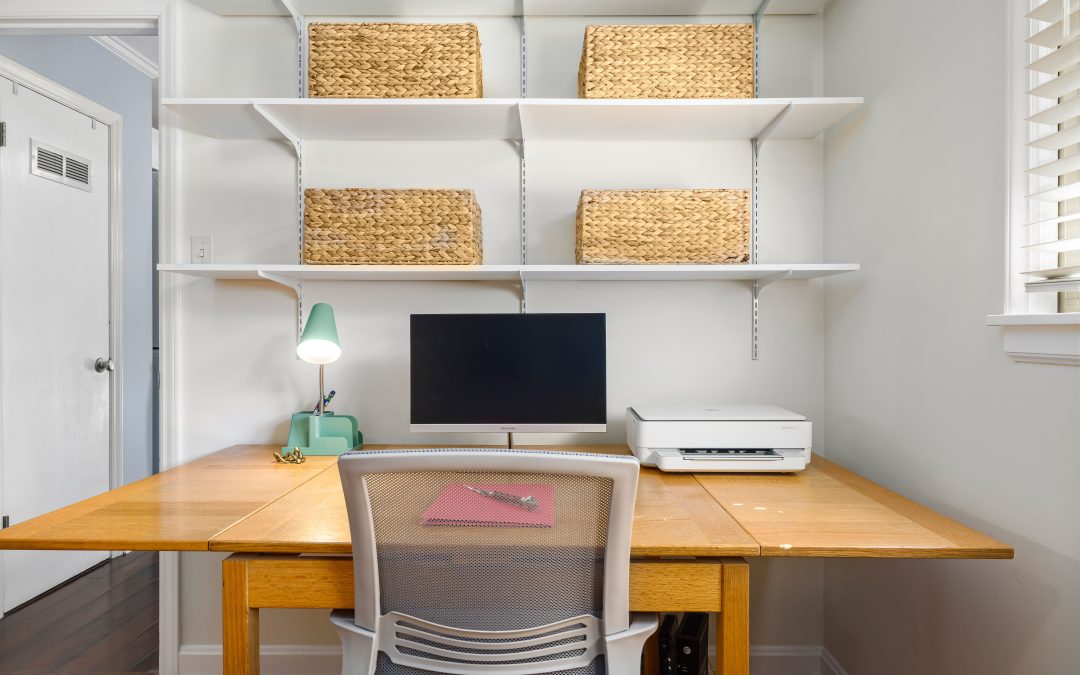
- Home office: Useful if household planning, paperwork, and scheduling already happen in one workspace.
- Laundry or utility area: An option for households that manage school supplies, activity gear, or weekly routines in this part of the home.
Choose a location that is easy to access without blocking walkways or creating another cluttered surface. If several people need to use the space, make sure they can reach the information and supplies they need.
2. Decide What Your Command Center Needs to Include
t's tempting to add a calendar, several boards, labeled baskets, multiple lists, and every organizational accessory you can find. Before purchasing anything, identify the information your household actually needs to manage.
A useful starting setup may include the following.
A Shared Family Calendar
Use a paper calendar, whiteboard, or shared digital calendar to track appointments, school events, extracurricular activities, and other important dates.
Choose a format everyone can understand. If you use color coding, assign colors consistently so family members can quickly identify their schedules.
Review the calendar together at the beginning of each week to identify conflicts, upcoming events, and anything that requires preparation.
An Incoming Paperwork Station
Create one designated spot for papers that need attention. This might include school notices, forms to sign, invitations, or documents that need to be reviewed.
Keep this area separate from completed paperwork. Once a document has been handled, file it, return it to the appropriate person, or dispose of it securely if it is no longer needed.
For sensitive documents, use a secure storage location rather than leaving them in an open family command center.
A Short To-Do List
A shared list can help everyone remember the household tasks that need attention. Keep it focused on current priorities rather than filling it with every possible chore or long-term project.
You might include items such as preparing for an upcoming appointment, returning a school form, or picking up supplies for a scheduled activity.
Review the list regularly and remove completed tasks. A list that never gets updated can quickly become another source of visual clutter.
A Place for Everyday Essentials
Depending on the location, your command center may also include a small tray, hook, or container for items such as keys, reusable shopping bags, or frequently used household items.
Only include things that genuinely belong there. The purpose is to make daily departures and arrivals easier, not to create a catchall for everything that enters the house.
3. Keep the Setup Simple and Easy to Maintain
An organizational system should be easy enough to use on busy days. If your family needs to follow too many steps to put something away or update a schedule, the system may not last.
Start with a few essentials and add features only when you identify a genuine need.
For example, a calendar and one paperwork tray may be enough for a household that primarily struggles with missed appointments and school forms. A larger family with multiple activity schedules may benefit from separate sections for each person.
Use clear labels when they make something easier to find. Avoid adding containers or categories simply because they look appealing.
A useful question to ask is: Will this feature make an everyday task easier? If the answer is no, it may not need to be part of your setup.
4. Make It Easy for Everyone to Participate
A family command center works best when everyone understands how to use it. Even young children can participate in simple routines when information is presented in an age-appropriate way.
Depending on your household, you might:
- Review the next day's schedule together each evening.
- Let children check a visual calendar for upcoming activities.
- Assign a designated place for school forms that need a parent's attention.
- Encourage family members to return shared items to their assigned locations.
- Review the upcoming week together to identify anything that needs preparation.
- Keep expectations realistic. The goal is to create a helpful routine, not to make every family member responsible for managing every detail.
- If the system isn't being used consistently, look for ways to make it more convenient before adding more rules.
5. Create a Routine for Updating Information
Even a well-designed command center can become confusing if its information is outdated. Build a short review into an existing routine so it doesn't become another major household task.
For example, you could review the calendar every Sunday, check incoming paperwork on weekday evenings, and remove outdated reminders as plans change.
During your review, ask:
- Are the upcoming appointments and activities accurate?
- Are there forms or reminders that still need attention?
- Are completed tasks and outdated notices still taking up space?
- Are the supplies and everyday items in their proper places?
- Is the setup still meeting the needs of the household?
Adjust the routine to fit your schedule. A few minutes of regular maintenance can help keep the command center useful without requiring a complete reset every month.
6. Adjust the System as Your Household Changes
Family routines don't stay the same forever. School schedules change, children become more independent, work arrangements shift, and household responsibilities evolve.
Your command center should change when your needs change.
If the calendar becomes difficult to read, simplify it. If papers consistently pile up in one section, reconsider how they're sorted. If nobody uses a particular board, remove it.
You may also discover that certain information is better handled digitally while physical reminders work better for other tasks. There is no single setup that works for every household.
The most effective system is the one that supports your current routines and can adapt when those routines change.
7. Avoid Turning Your Command Center Into a Clutter Zone
A command center can become counterproductive if it collects every receipt, flyer, note, and item that doesn't have another home.
Set clear limits on what belongs in the space. Incoming paperwork should have a next step, reminders should be current, and everyday essentials should be limited to the items your family actually needs nearby.
If the area starts overflowing, take a few minutes to remove outdated information and relocate items that belong elsewhere.
Remember that the command center is meant to organize information and support daily routines. It doesn't need to store every household document or serve as a permanent home for miscellaneous belongings.
Create a Household System That Works for You
A family command center can be a useful starting point for managing the moving parts of everyday life. By choosing a convenient location, keeping essential information together, and establishing a simple maintenance routine, you can make schedules and household responsibilities easier to manage.
Start with the one challenge that causes the most frustration in your home. Once that part of your routine becomes easier, you can decide whether additional tools or systems would be helpful.
If you would like support creating more functional spaces throughout your home, Peace of Mind Organization can help you explore practical organizing solutions that fit your needs.
Learn more about our home organizing services or contact us to discuss your project.
Peace of Mind Organization serves Virginia Beach, Chesapeake, Norfolk, Portsmouth, Suffolk, Hampton, and Newport News.
Ready to book a consultation?
Let's talk about your space. Pick a time that works for you.
Book Your Free Consultation